
%22%20fill%3D%22none%22%20stroke-linecap%3D%22round%22%3E%0A%20%20%3Cpath%20d%3D%22M%2058%20120%20L%20106%20120%22%20stroke%3D%22%234890f0%22%20stroke-width%3D%223%22%2F%3E%0A%20%20%3Cpath%20d%3D%22M%20106%20120%20q%2034%200%2034%2030%20q%200%2026%20-24%2026%22%20stroke%3D%22%2378c0f0%22%20stroke-width%3D%223%22%2F%3E%0A%20%20%3Ccircle%20cx%3D%22130%22%20cy%3D%22176%22%20r%3D%224%22%20fill%3D%22%23c3bcf3%22%2F%3E%0A%20%20%3Cpath%20d%3D%22M%2096%20115%20v%208%20M%20106%20114%20v%209%20M%20116%20114%20v%209%22%20stroke%3D%22%23c3bcf3%22%20stroke-width%3D%222%22%20opacity%3D%220.7%22%2F%3E%0A%20%20%3Cpath%20d%3D%22M%2058%20120%20L%2016%2094%22%20stroke%3D%22%23c3bcf3%22%20stroke-width%3D%222.5%22%20opacity%3D%220.9%22%2F%3E%0A%20%20%3Cpath%20d%3D%22M%2058%20120%20L%2012%20116%22%20stroke%3D%22%23a8c4f5%22%20stroke-width%3D%222.5%22%20opacity%3D%220.8%22%2F%3E%0A%20%20%3Cpath%20d%3D%22M%2058%20120%20L%2020%20140%22%20stroke%3D%22%23a8c4f5%22%20stroke-width%3D%222.5%22%20opacity%3D%220.7%22%2F%3E%0A%20%20%3Cpath%20d%3D%22M%2058%20120%20L%2034%20160%22%20stroke%3D%22%2378a8e8%22%20stroke-width%3D%222.5%22%20opacity%3D%220.6%22%2F%3E%0A%3C%2Fg%3E%0A%3C%2Fsvg%3E)
Hit The Hatch
A fly-fishing network where your next pattern is designed, matched to the hatch, tied in Nepal, and proven on the water.
Every angler has stood at the river guessing.
Patterns get traded across forums and tackle-shop bins with no way to know whether a fly actually worked, for whom, or where. Money gets spent on flies that don't match what's actually emerging on that water that week, and tying your own is a craft most people never find a way into.
The turn
Close the loop between designing a fly and knowing it works.
Design a pattern, match it to what's hatching on your water this season, have it tied by hand in Nepal, then fish it and report back — every result feeds a shared pattern library that gets sharper with every season. The design tool's own ambition is to close that loop even tighter: a pattern that reflects proven results before it's ever tied for the first time.
How it works
- 01
Design a pattern
Start from a base pattern, adjust proportions, colour and materials, and get a rendering you can turn and inspect from every angle before committing it to thread and feather.
- 02
Match it to the hatch
A hatch calendar for your water and season shows which insects are actually emerging, week by week, so the pattern you tie is the one fish are already looking for.
- 03
Tied in Nepal, shipped to you
The finished spec goes to a Nepal-based tying partnership and comes back as a real, fishable fly — the design tool's whole point is that what you see is what gets tied.
- 04
Fish it, report back
A short report — water, date, what happened — feeds back into the pattern library, so the next angler on that river inherits what this season already taught the network.
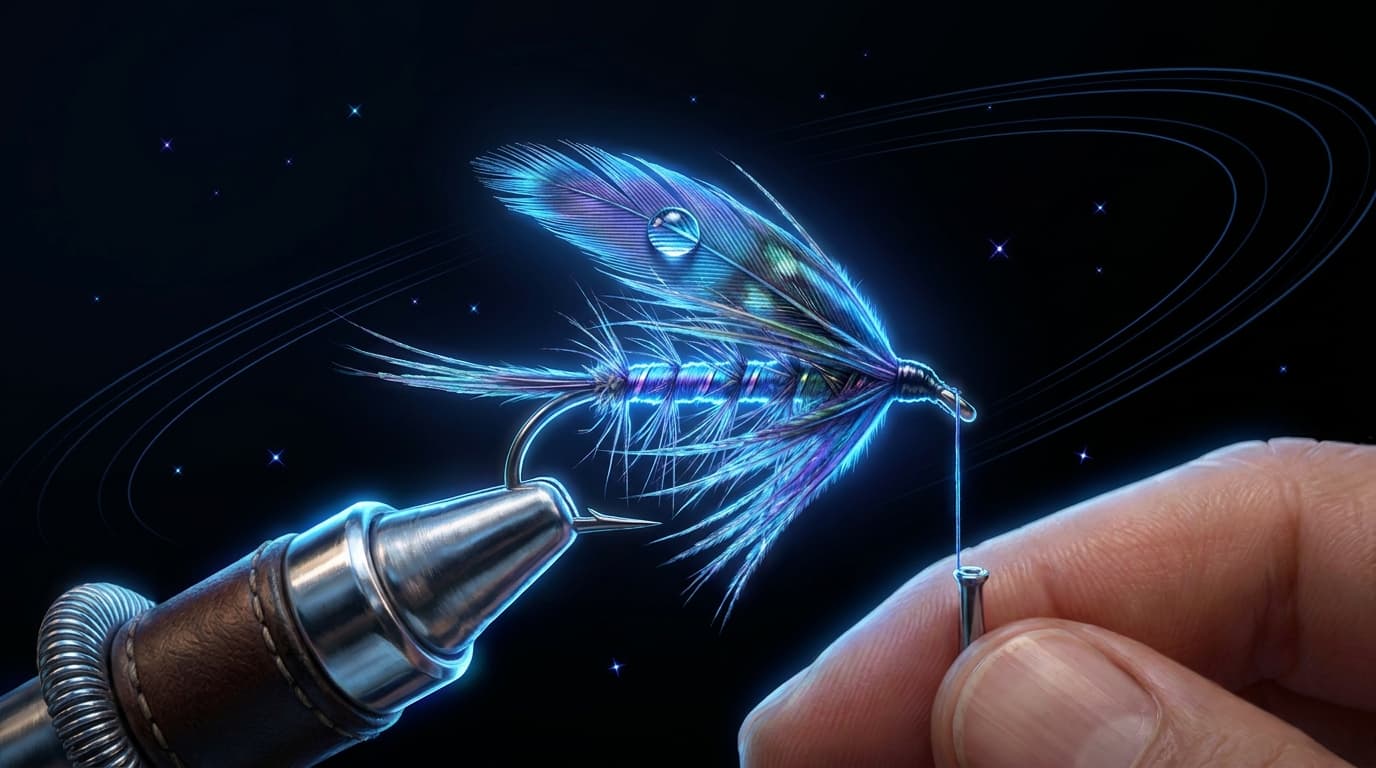
This is what the design tool is building toward on every pattern: a fly precise enough in colour, proportion and material to be tied exactly as designed. The design tool itself is a visual concept tool today, not a full parametric tying-spec generator — it renders a pattern as a 2D preview you can turn and inspect, the same rotation you can try on this very page, rather than outputting a machine-checked set of tying instructions on its own. The design tool's next milestone is a parametric mode that outputs an exact, tieable specification directly, with true live material swapping in the viewer itself — feather, thread and hook changing in place as you choose them, not yet built.
Teaching at the right level
The same principle behind every venture in this portfolio — meet the learner exactly where they are, per Teaching at the Right Level's own evidence base — source applies here to anglers instead of children: a beginner gets curated, reliably-tied starting patterns and plain-language hatch guidance, while an experienced tyer gets full design-tool control and the network's raw, season-by-season data. See the full methodology It is also the one clearly adult-audience venture in the portfolio — useful proof that BeethovenJr is a family brand, not only a children's brand.
Where it lives
Hit The Hatch didn't start as a company. It began in 2023 as a small online community of fly-tying enthusiasts trading patterns and hatch reports for the fun of it, built around one member's own rough design tool for visualising a pattern before tying it. The Nepal manufacturing side came later, almost by accident — enough members asked to simply buy a tied version of a pattern they'd designed that turning it into a real order became the obvious next step. It is now the newest part of the business, generating early, real revenue from custom fly orders, and the company remains bootstrapped on that revenue with no outside funding raised. Every fly is hand-tied by skilled tying artisans in Nepal, paid against a published, tiered rate card scaled to a pattern's complexity and a tyer's skill level, with a guaranteed floor per fly regardless of market price — the same principle behind Airbrush Art School's studio: the brand's social claims and its production economics have to be the same story. See Airbrush Art School
What we don’t know yet
The design tool is a visual concept tool, not yet a parametric tool that outputs a real tieable specification on its own — that is genuinely harder, and worth being precise about rather than implying it already exists. Whether the network stays free with only the flies monetised, or grows a subscription layer on top, isn't settled yet. Fishing regulations — barbless requirements, invasive-material restrictions, species rules — genuinely vary by water, and a platform recommending patterns has to be designed around that rather than override it.